

If you live in Dubai, you’ve likely heard the term “IPTV“ whispered in tech souks or seen advertisements for “10,000 channels for AED 100.” But what exactly is IPTV, and more importantly, where does the line between “innovative technology” and “illegal activity” blur in the UAE?
This comprehensive guide breaks down everything you need to know about IPTV (Internet Protocol Television) in the Dubai market, from the technology itself to the specific laws enforced by the TDRA (Telecommunications and Digital Government Regulatory Authority).
What is IPTV? (The Non-Technical Explanation)
IPTV stands for Internet Protocol Television.
In the old days, your TV signal arrived via an antenna (terrestrial), a satellite dish on your roof, or a cable buried underground. IPTV is different. It delivers television content through your internet connection.
Think of it like YouTube or Netflix, but for live TV channels. Instead of waiting for a show to air at a specific time, IPTV often gives you the flexibility to watch what you want, when you want.
How It Works
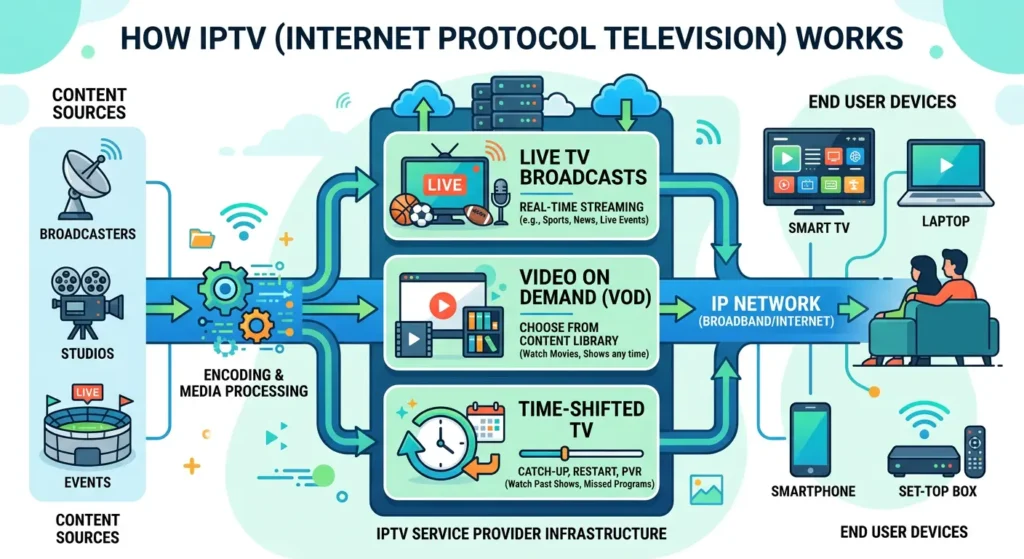
- Live TV: Streaming channels in real-time (like watching the news on Al Jazeera or a cricket match on Willow TV).
- VOD (Video on Demand): Selecting movies or shows from a library to watch instantly (like Netflix).
- Time-Shifted TV: “Catch-up” TV that lets you watch a show you missed hours or days ago.
The “Grey Market” Trap: Is IPTV Legal in Dubai?
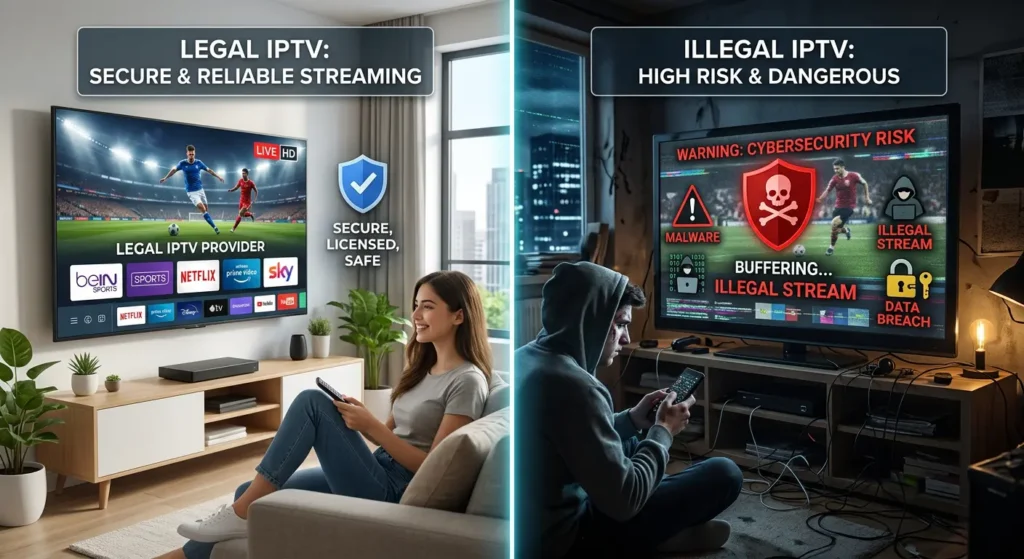
This is the most critical section for any resident in Dubai. The technology of IPTV is legal. However, unlicensed IPTV services are strictly illegal.
In Dubai, the government and the TDRA maintain a strict monopoly on media distribution to protect copyright laws.
The Golden Rule of UAE Streaming
If you are paying for a service that offers thousands of encrypted international channels (Sky, beIN, OSN) for a suspiciously low yearly fee (e.g., AED 100–300), it is 100% illegal.
The Risks of Illegal IPTV in Dubai
Many expats are tempted by “jailbroken” Firesticks or “Spider TV” boxes found in Dragon Mart or online souks. Here is why you must avoid them:
- Service Unreliability: Illegal servers are frequently raided and shut down. You could pay for a year and lose service the next day with no refund.
- Cybersecurity Threats: Many illegal IPTV apps carry malware. By installing them, you may expose your home network (and your banking apps) to hackers.
Top Legal IPTV & Streaming Providers in Dubai (2025)
To watch TV safely and reliably, you should stick to the licensed providers. The landscape in 2025 offers high-quality 4K streaming with zero legal risk.
1. The Giants: Etisalat eLife & du Home
These are the primary licensed IPTV providers in the UAE. If you have a home internet connection, you likely have access to these.
- Etisalat eLife:
- Best For: Families and integrated billing.
- Content: Offers massive “Add-on” packages for specific communities (e.g., Pinoy Pack, Western Pack, Arabia Pack, Asian Pack).
- 2025 Insight: Their “eLife Ultra” plans now often include subscriptions to third-party apps like Starzplay or Amazon Prime.
- du Home:
- Best For: Flexible internet + TV bundles.
- Pricing: Packages typically start around AED 239/month (internet + basic TV), scaling up to AED 699+ for premium speeds and channels.
2. The Premium Streamers (OTT)
If you don’t want a cable box, these apps are fully legal and work on your Smart TV, phone, or tablet.
| Provider | Best For | Approx. Price (2025)* |
| OSN+ | HBO content (House of the Dragon), Hollywood blockbusters. | ~AED 49/month (Standard) |
| TOD | Sports Fans. This is the digital arm of beIN Sports. Essential for Premier League, Champions League, etc. | ~AED 695/year |
| Starzplay | Sports (Serie A, Cricket) and Anime. Great value. | ~AED 35/month |
| Disney+ | Marvel, Star Wars, and Disney classics. | ~AED 29.99/month |
| Netflix | Originals and global variety. | ~AED 29 – 55/month |
*Prices are estimates and subject to change by the provider.
Technical Setup: How to Watch IPTV in Dubai

If you choose a legal route, setting up is simple. However, many users struggle with buffering or Wi-Fi dead zones in Dubai’s concrete apartments.
1. Hardware
- Smart TVs: Most modern TVs (Samsung, LG, Sony) available in Sharaf DG or Jumbo Electronics come with OSN+, YouTube, and Netflix pre-installed.
- Streaming Sticks: Devices like the Apple TV 4K or Google Chromecast with Google TV are excellent legal hardware options available at Virgin Megastore or Amazon.ae.
2. Internet Speed
- For 4K streaming, you need a stable speed of at least 25 Mbps.
- Tip: If you live in a large villa, standard routers often fail. Consider a Mesh Wi-Fi system (like Linksys Velop or Netgear Orbi) to ensure your IPTV doesn’t buffer in the bedroom.
If you’re still facing buffering or connection issues, check out our guide on IPTV Not Working in UAE? Quick & Proven Solutions for quick fixes.
What to Look for Before Choosing an IPTV Service in Dubai
At this point, you understand how IPTV works and which providers are legal in the UAE. But one question still remains for most residents: how do you actually choose the right service for your needs?
In Dubai’s fast-growing streaming market, not all IPTV experiences are equal. Two services may offer similar channels, but the viewing experience, reliability, and long-term value can be completely different.
The first thing to consider is content relevance, not just quantity. Many illegal providers advertise “10,000+ channels,” but in reality, most users regularly watch fewer than 20. What matters more is whether your preferred content is available in high quality. For example, sports fans often prioritize stable access to platforms like beIN Sports, while families may look for regional entertainment or kids’ programming.
Another important factor is streaming stability. In Dubai, peak hours (especially evenings) can put pressure on networks. Licensed providers such as Etisalat and du are built to handle this demand with dedicated infrastructure. This is why their streams remain consistent even during high-traffic periods, unlike many unlicensed services that suffer from lag, buffering, or sudden downtime.
Device compatibility also plays a bigger role than many people expect. A good IPTV setup should work seamlessly across your Smart TV, mobile, and streaming devices like Apple TV 4K. This flexibility is especially useful in households where multiple users want access at the same time. Legal platforms typically invest in well-optimized apps, ensuring smoother navigation and fewer technical issues.
You should also pay attention to app quality and user interface. This is often overlooked, but it directly affects your daily experience. Platforms like Netflix or Disney+ have set a high standard with intuitive menus, fast loading times, and personalized recommendations. Many illegal IPTV apps, on the other hand, feel clunky and outdated, making it harder to find content quickly.
Security is another critical consideration. When you install unofficial IPTV apps, you’re not just streaming content, you’re also giving that app access to your device and network. This is where risks like data tracking, malware, or unauthorized access can come into play. Sticking with licensed services significantly reduces these risks and ensures your personal data remains protected.
Finally, think about long-term reliability rather than short-term savings. A cheap yearly subscription might look attractive, but if the service disappears after a few months, you end up paying more in the long run. Legal IPTV providers offer consistency, customer support, and regular updates, which ultimately deliver better value over time.
In a city like Dubai, where digital regulations are strict and internet infrastructure is world-class, choosing the right IPTV service is less about finding the cheapest option and more about finding a trusted, high-performance solution that fits your lifestyle.
Frequently Asked Questions (FAQ)
Q: Can I use a VPN to watch IPTV content from my home country (like BBC iPlayer or Hulu)?
A: While VPNs are widely used in the UAE, the legal usage policy is strict. 14 Using a VPN to commit a crime or access prohibited content is illegal. However, many residents use VPNs for privacy. Technically, bypassing geo-blocks breaches the terms of service of the streaming provider, but it is a common “grey area” practice compared to the strictly illegal act of buying pirated IPTV subscriptions.
Q: Why is my IPTV buffering so much in the evenings?
A: This is often “ISP throttling” or network congestion during peak Dubai hours (8 PM – 11 PM). If you are using a legal service (like eLife), call 101 for support. If you are using an illegal service, buffering is normal because their servers are overloaded and cheap.
Q: Are “Android Boxes” illegal?
A: The hardware itself is not illegal. You can buy an Android TV box at any electronics store. It only becomes illegal if the seller has pre-loaded it with “cracked” apps that provide pirated channels. Always buy a “clean” box and subscribe to legal apps like TOD or OSN+.
Conclusion: The Safe Way to Stream
In Dubai, the peace of mind is worth the price tag. While illegal IPTV services may seem like a bargain, the risk of malware, sudden shutdowns, and legal action makes them a poor investment for the savvy resident.
Next Step for You:
If you are unsure which legal package fits your budget, I can help you compare the specific channel lists of Etisalat eLife vs. du Home to see which one carries your favorite channels (like TFC, Ary Digital, or Zee TV). Would you like to see that comparison?
